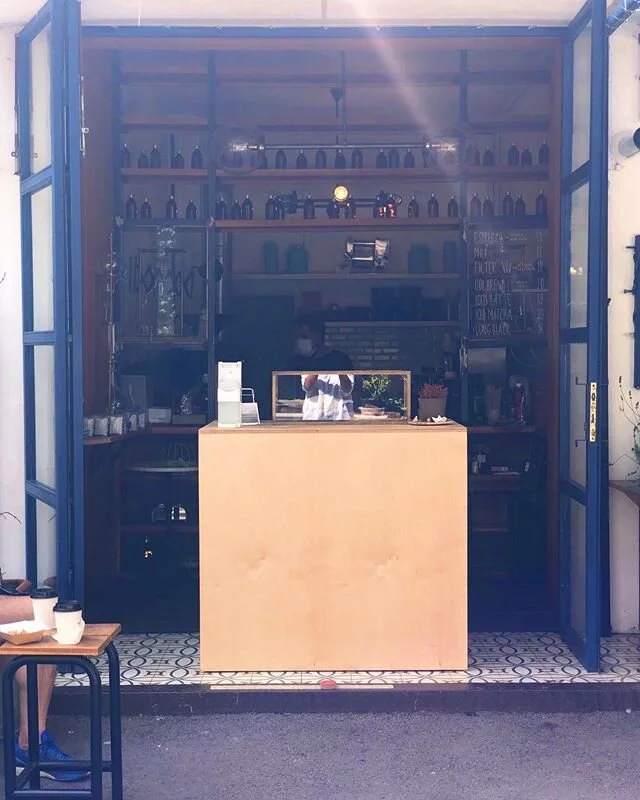
FOUR LETTER WORD SHOP
Free Shipping on orders over $50

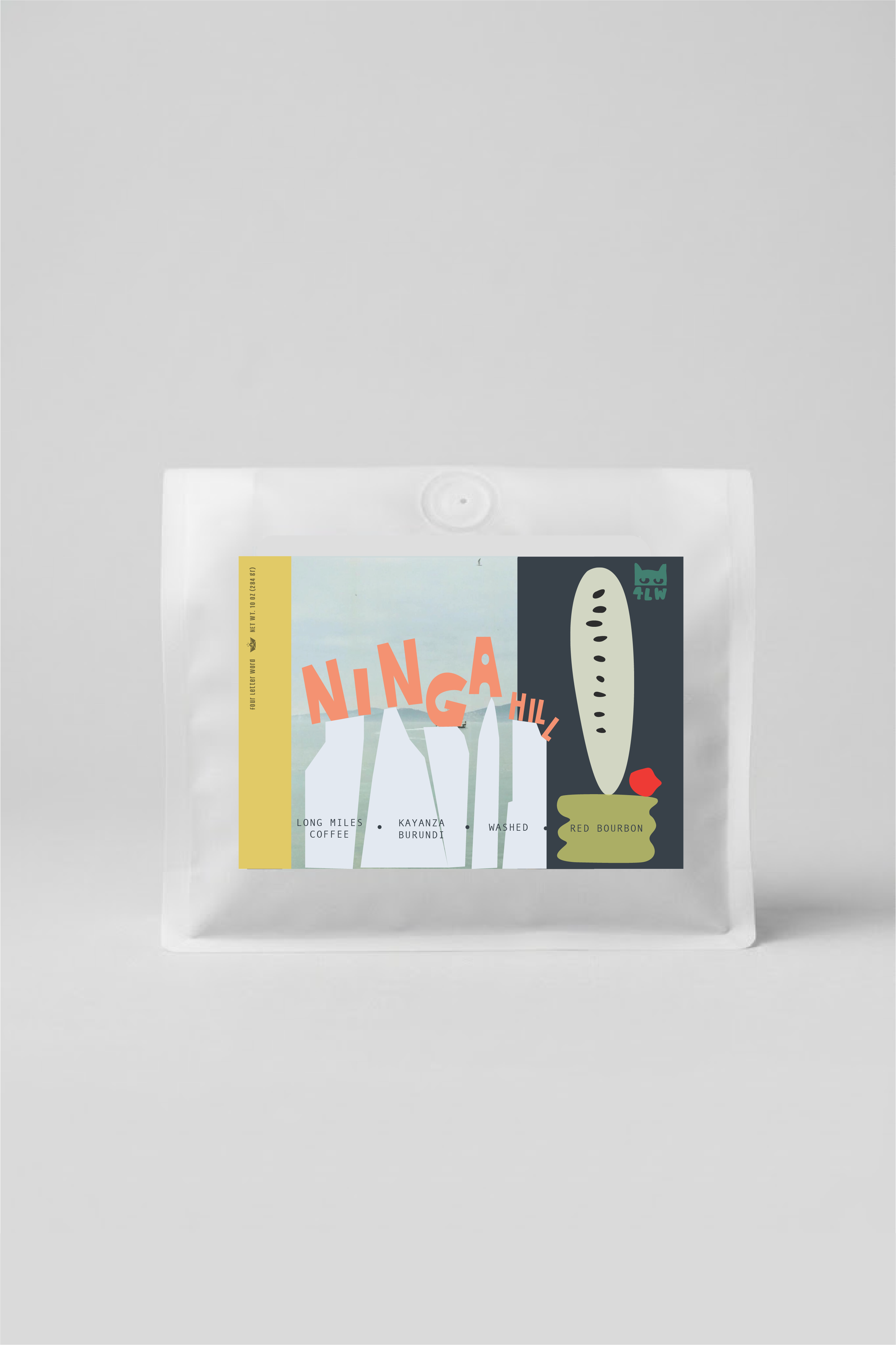
PRODUCER: Long Miles Coffee Project
LOCATION: Muramvya
VARIETY: Red Bourbon
PROCESS: Washed
ORANGE, HONEY, CARAMEL
This lot is produced in collaboration with the Long Miles Coffee Project, from the hills of Ninga in Muramvya, where hundreds of smallholder farmers deliver cherries to the Ninga washing station.
Farmers bring their freshly harvested cherries to Ninga. From there, washed coffees are floated and hand sorted for ripeness. The cherries are then pulped and undergo a single stage of dry fermentation for twelve hours. Coffee is then graded by density and left to soak for another 4-6 hours in a rinse tank. After that, coffee is taken to covered drying beds, where it spends 6-48 hours pre-drying. Lastly, it is moved to traditional raised African beds to slow dry for 16-20 days and reach the station’s desired moisture content of 10.5%.
About the Red Bourbon variety:
Red Bourbon is prized not only for its improved yield but also for its excellent cup quality. The beans thrive at high altitudes, ranging from 1,100 to 2,000 meters, where the coffee cherries ripen slowly, allowing for the development of complex flavors.
It typically has a high glucose content, creating a smooth, rich, sweet cup with a pronounced sweetness and flavors reminiscent of juicy red fruits with layers of sharp, standout notes such as nougat, chocolate, and butter.
Whole Bean / For Filter and Espresso
We recommend resting our coffees for at least 10 days post-roast. Dense coffees, in particular, often continue to improve for more than six weeks.
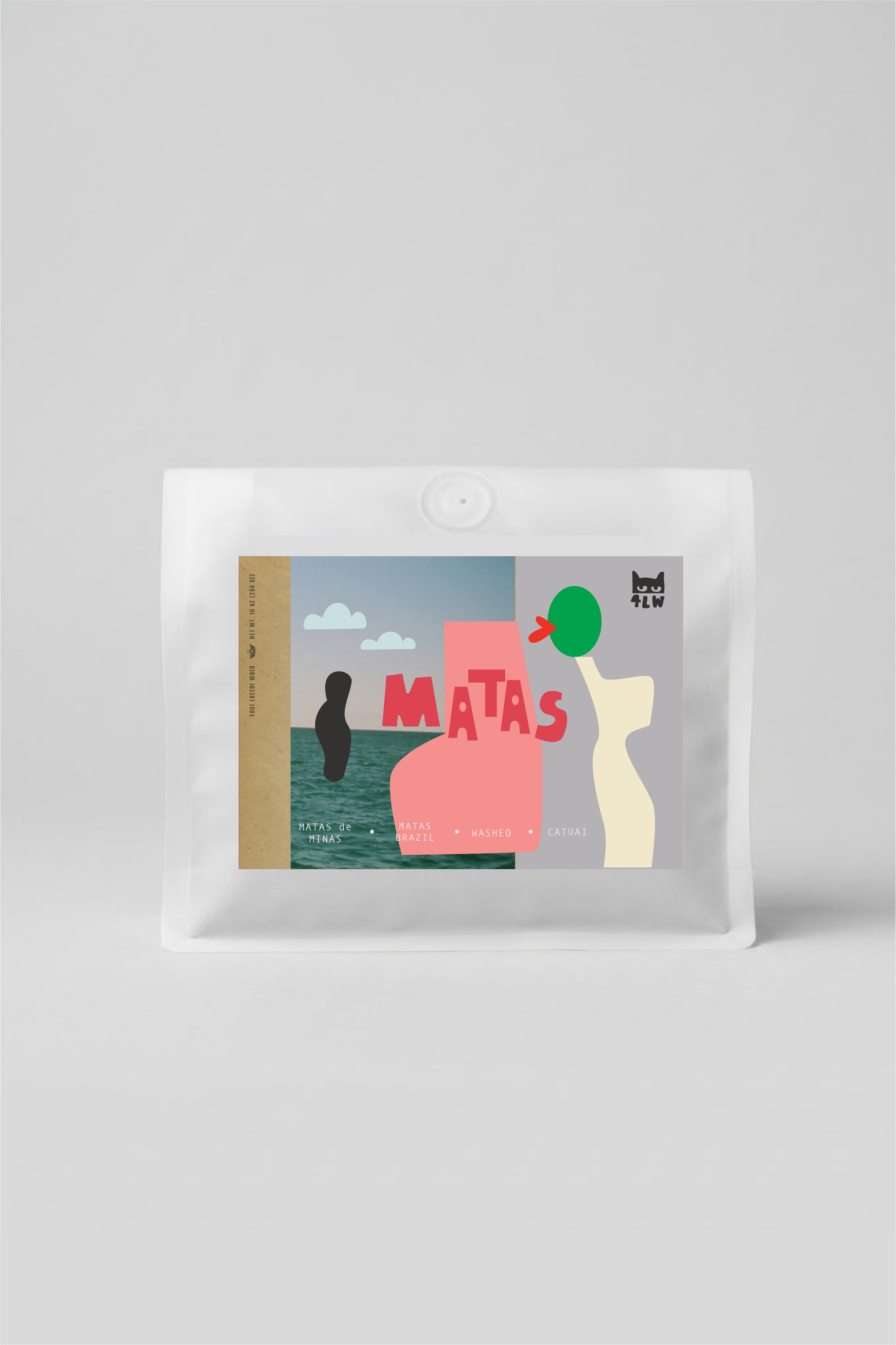
PRODUCER: Leonardo Sales
LOCATION: Manhuaçu, Minas Gerais
VARIETY: Arara, Catuai, Catucai
PROCESS: Washed
PEANUT BUTTER BRITTLE, COCOA, HINT OF LEMON
Leonardo Sales’s Fazenda Córrego da Boa Vista is located in the heart of the coffee-growing hub of Matas de Minas, specifically in the municipality of Manhuaçu in the state of Minas Gerais. Manhuaçu is a vibrant city that lives and breathes coffee.
Leonardo is the third generation to lead the family farm and uses his dynamic and creative vision to explore the potential of each area of the property. Leonardo and his team grow the Arara, Catuaí, and Catucaí varieties. He produces washed, naturals, and pulped naturals.
Whole Bean / For Filter and Espresso
We recommend resting our coffees for at least 10 days post-roast. Dense coffees, in particular, often continue to improve for more than six weeks.
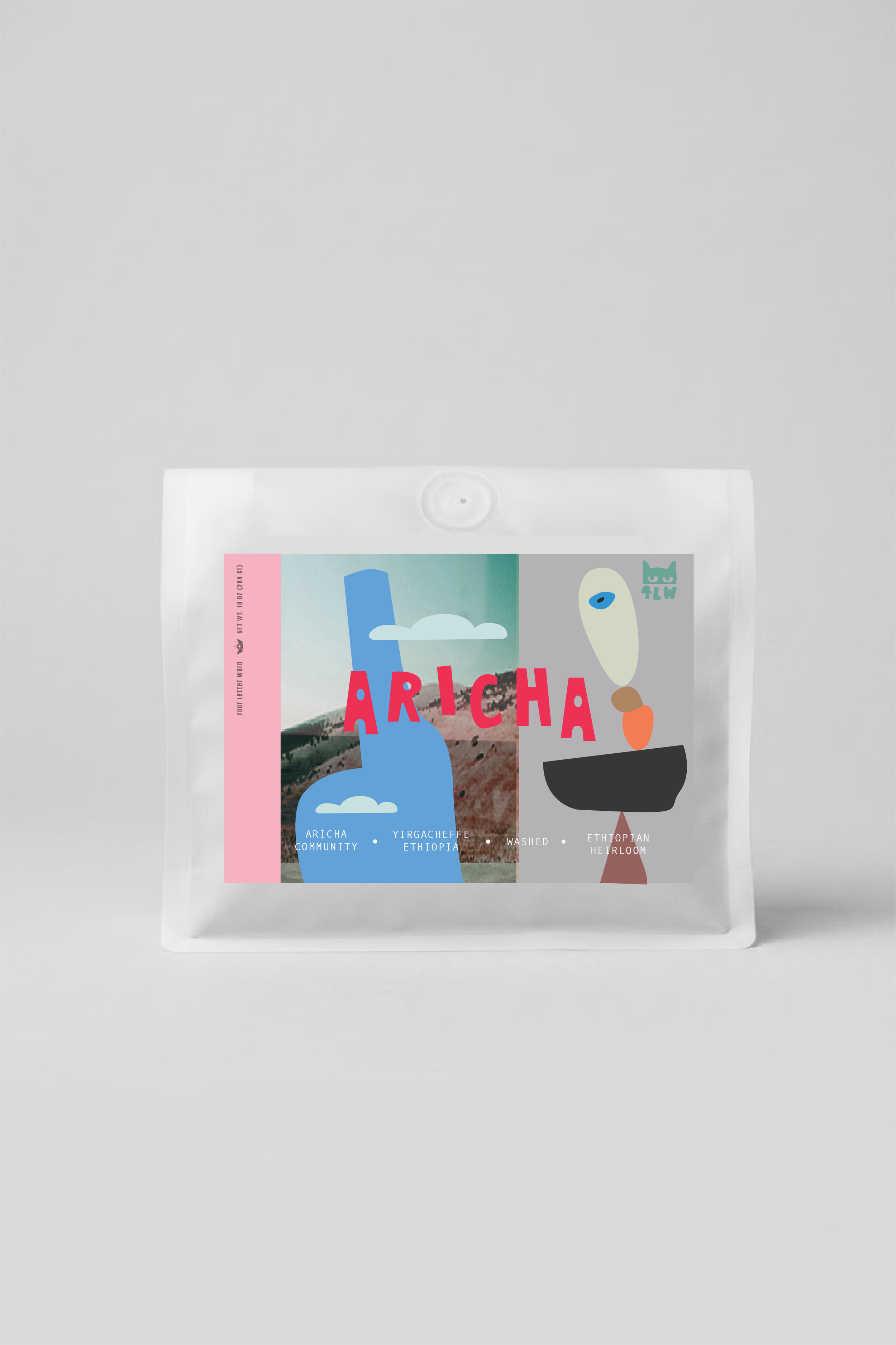
PRODUCER: Aricha Co-op
REGION: Gedeo, Yirgacheffe
VARIETY: Ethiopia Heirloom
PROCESS: Washed
MANGO, LIME CANDY, AGAVE
Aricha is a remote community in Ethiopia’s Yirgacheffe region. It is home to one of the oldest coffee growing traditions in the world.
This coffee is fermented between 48 and 72 hours in fermentation tanks then dried between four and five days on raised beds.
Whole Bean / For Filter and Espresso
We recommend resting our coffees for at least 10 days post-roast. Dense coffees, in particular, often continue to improve for more than six weeks.
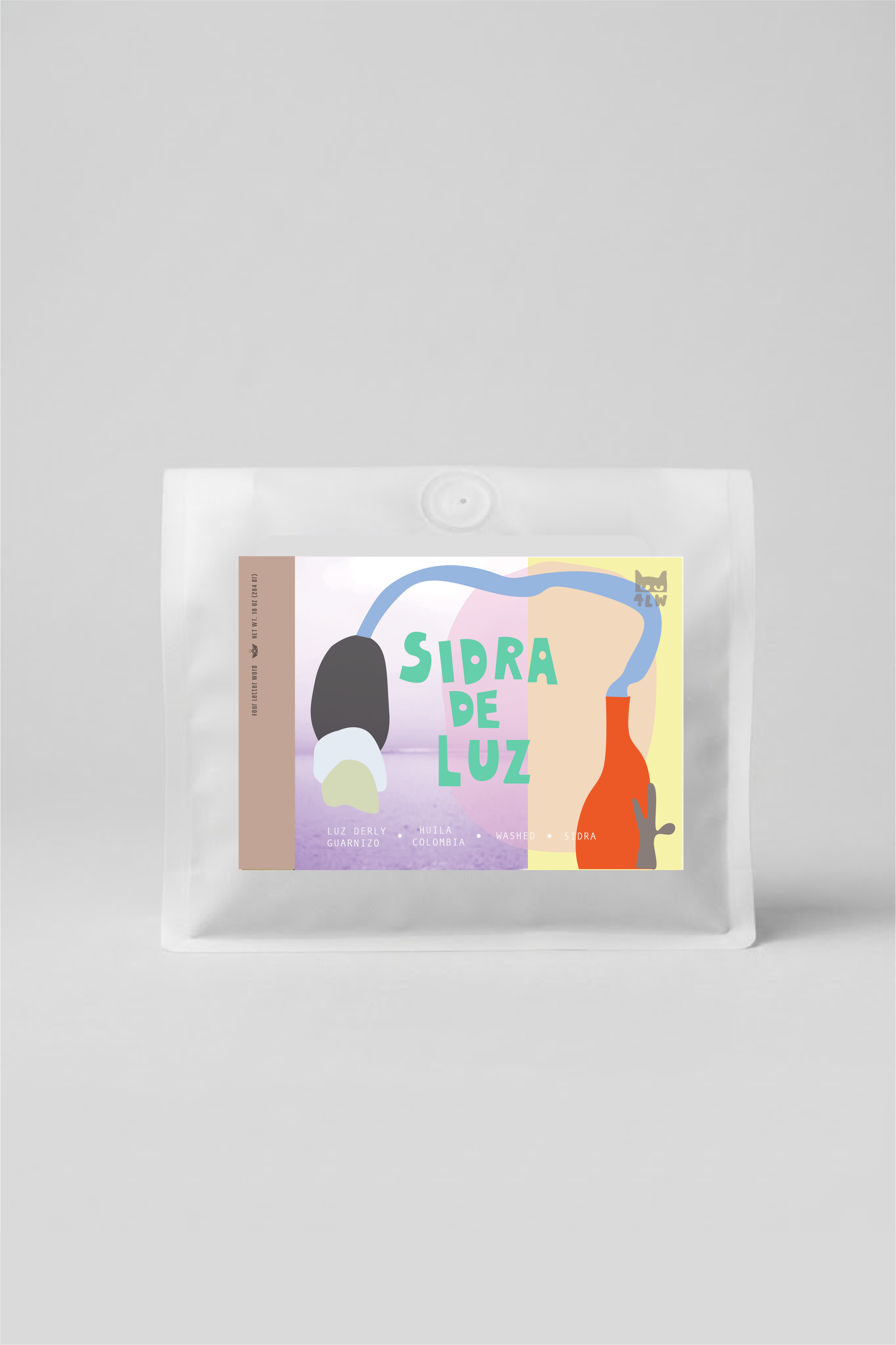
PRODUCER: Luz Derly Guarnizo
LOCATION: Tarqui, Huila
VARIETY: Sidra
PROCESS: This washed micro lot was treated to a double-fermentation post-collection process. After the harvest came in from the field, it was fermented in bags for 30 days, de-pulped, and then additionally fermented in bags for another 30 days. The coffee was dried on raised beds inside a parabolic-style greenhouse for 15 to 20 days.
LIME, CARAMEL, COTTON CANDY / HARD CANDY
Luz Derly Guarnizo is a member of an extensive coffee-growing family from the municipality of Tarquí, located in the south-central region of Huila. Her three uncles, several cousins, and other extended family members are also coffee growers.
Luz Derly grows the Sidra variety at one of her family’s farms Finca El Pringanos, which sits at 1,700 m.a.s.l and spans a surface area of two hectares, one of which is dedicated to the cultivation of her 700 Sidra trees. During the fly crop (Oct-Nov) and the main harvest, Luz Derly hires 3 itinerant pickers to help her carefully hand-select her coffee cherries.
About the Sidra variety:
Sidra is a new hybrid coffee variety, made from Bourbon and Typica, and it melds the characteristics of these two varieties. Dense sugars and weight of a Red Bourbon and the acidity of Typica yields itself to sweet, floral qualities and crisp, juicy, fresh malic acidity.
Whole Bean / For Filter and Espresso
We recommend resting our coffees for at least 10 days post-roast. Dense coffees, in particular, often continue to improve for more than six weeks.
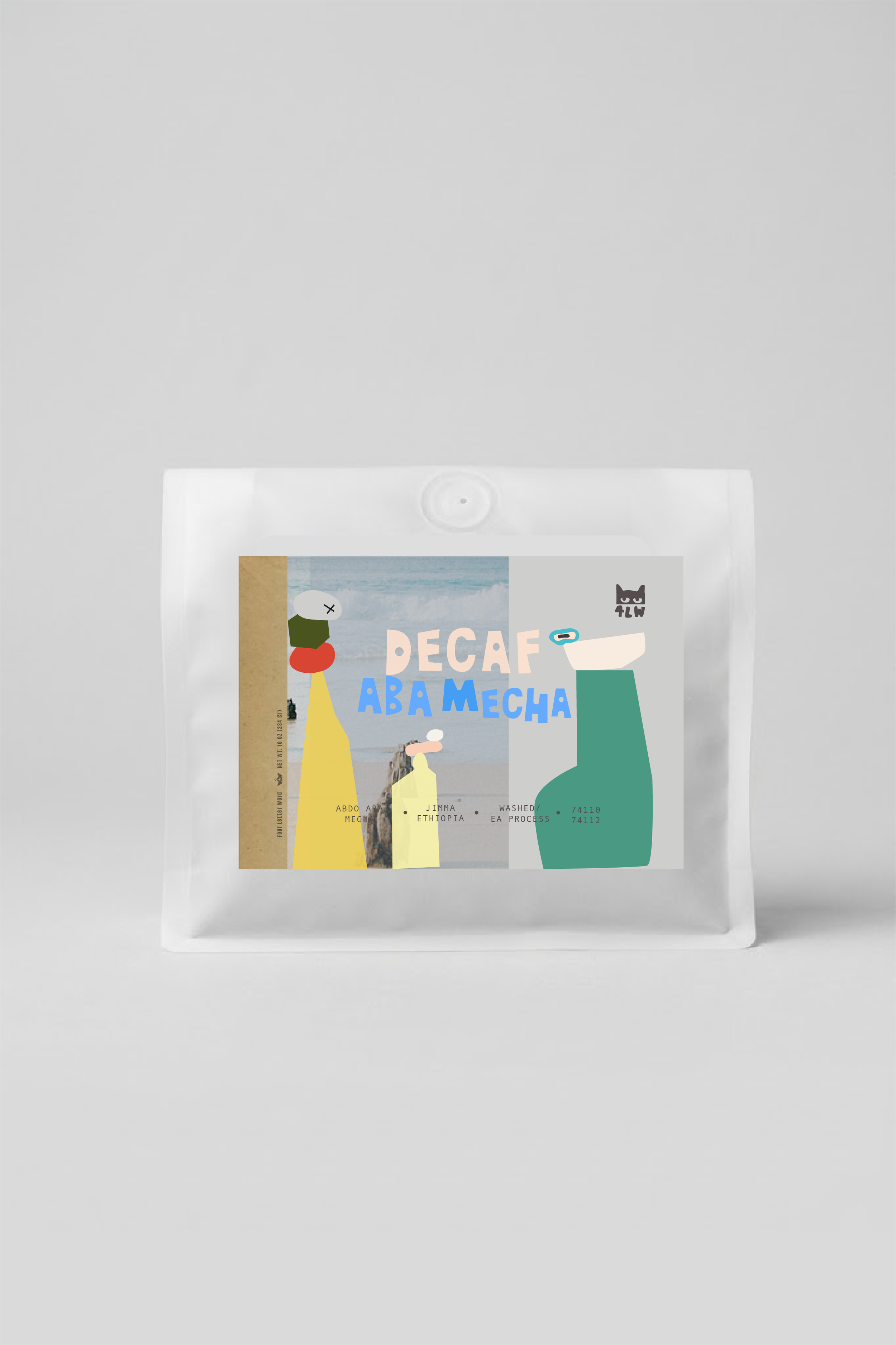
PRODUCER: Abdo Aba Mecha
REGION: Jimma
VARIETY: 74110 / 74112
PROCESS: Washed/EA Decaf*
*Sugarcane ethyl acetate (EA) process, also known as natural decaffeination or “sugar cane decaffeination.” This process requires the fermentation of sugarcane in order to create ethanol, which is then mixed with acetic acid. After soaking the beans. in water, the beans are rinsed in EA, which bonds to and removes caffeine.
MELON, MILK CHOCOLATE, GRAHAM CRACKER
A smallholder farmer and exporter, Abdo Abamecha has been making waves in the coffee industry since he began exporting in 2021. His 30-hectare coffee farm, a testament to his dedication and passion, is a treasure trove of both washed and natural coffees.
Whole Bean / For Filter and Espresso
We recommend resting our coffees for at least 10 days post-roast. Dense coffees, in particular, often continue to improve for more than six weeks.
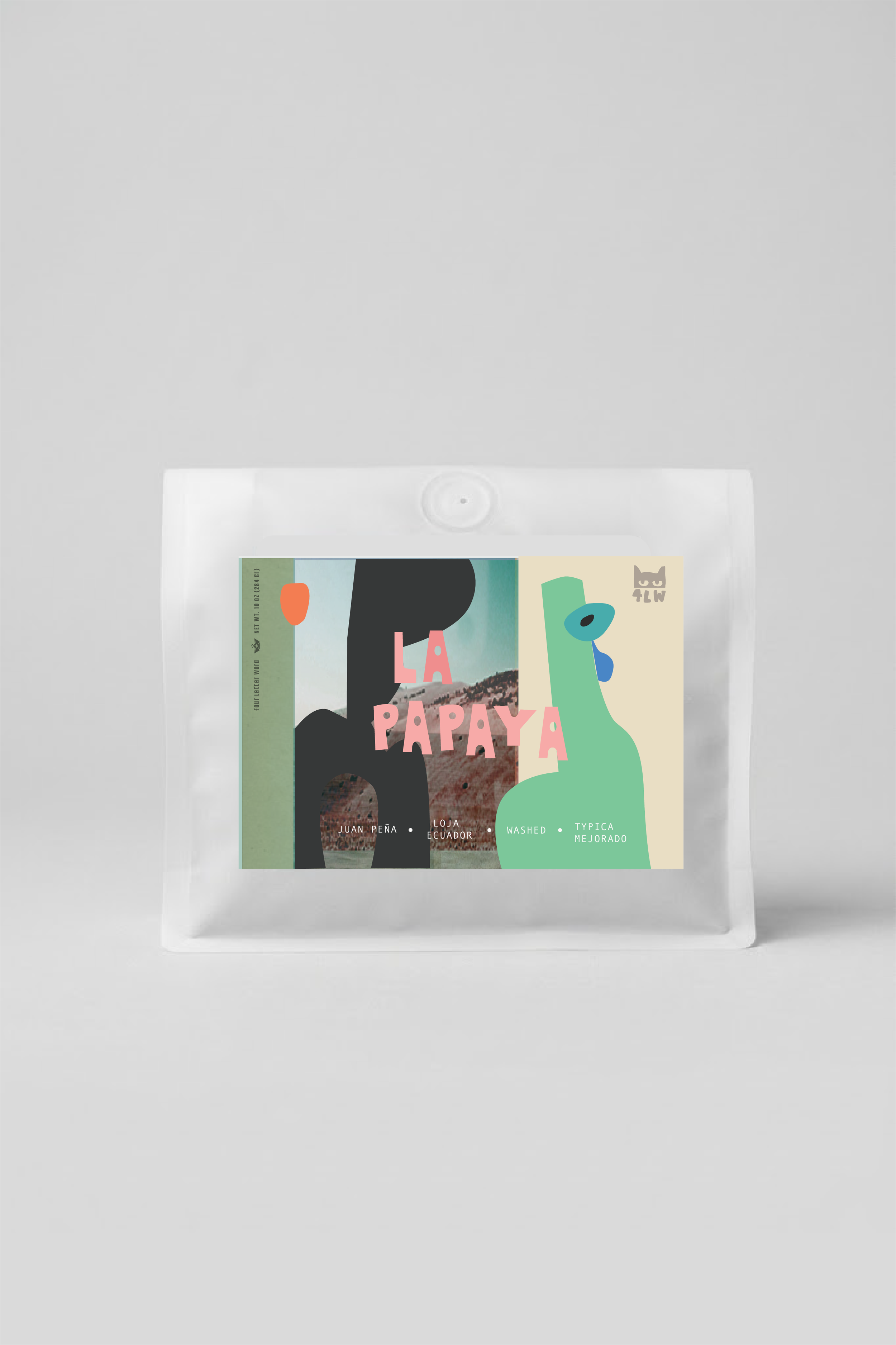
PRODUCER: Juan Peña
FARM: La Papaya
LOCATION: Saraguro, Loja, Ecuador
PROCESS: Washed
VARIETY: Typica Mejorado
HONEY, PEACH TEA, DELICATE WHITE FLORALS
Juan Peña of Hacienda La Papaya is an agricultural engineer and award winning coffee producer based in southern Ecuador.
About the Typica Mejorado variety:
Genetically, it is a Bourbon crossed with an heirloom Ethiopia variety varieties—it’s not a descendant of the Typica lineage, despite its name. It can take on the Bourbon qualities of refined sweetness and the florals reminiscent of Ethiopian coffees.
We are lucky to have a very limited quantity of this guy on our menu.
Whole Bean / For Filter and Espresso
We recommend resting our coffees for at least 10 days post-roast. Dense coffees, in particular, often continue to improve for more than six weeks.
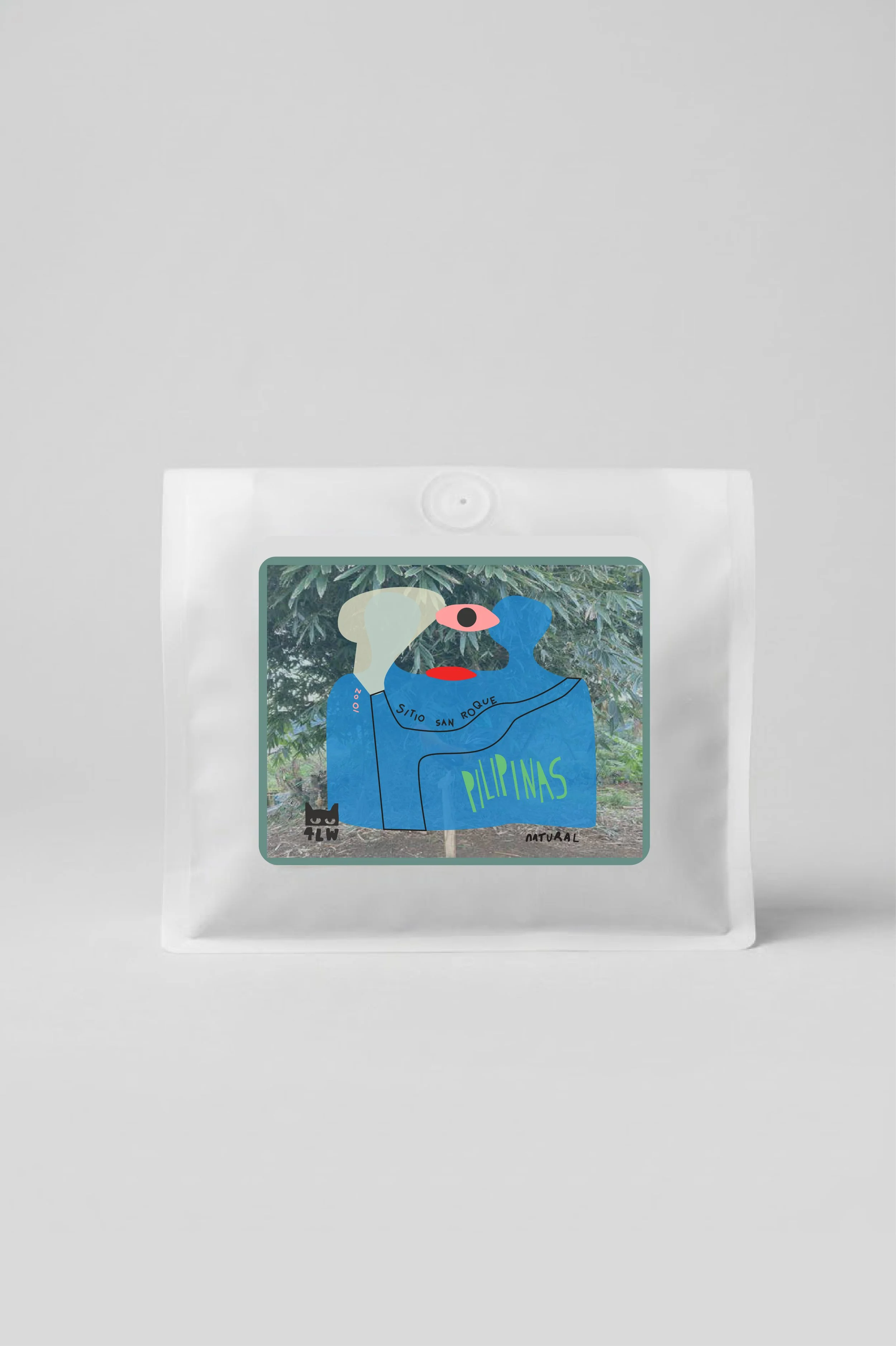
Region: Pigtauranan, Pangantucan, Bukidnon
Wet Mill: Sitio San Roque
Growers: 55 smallholder family farmers
Process: Natural
Altitude: 1200-1800 MASL
Harvest: July 2025
RICH CHOCOLATE MALT, STEWED NECTARINE
Sitio San Roque is at the foothills of the Mount Kalatungan range, a protected area with a rich, biodiverse ecosystem that is home to the Manobo tribe and several endemic birds and plants. It has rich volcanic soil and a unique microclimate, making it an ideal area for growing coffee. The Manobos initially cultivated coffee for their own consumption and the commercial market until prices dropped in the 1960s. Since then, coffee as a primary crop has been replaced by sugarcane and corn.
In 2016, we were introduced to a cooperative of coffee farmers in Pigtauranan, most of whom cultivated robusta and only recently started to grow arabica. There was not much interest in arabica then because their primary market was commodity and specialty was just a buzz word in the Philippines. Coffees on this side of the coffee are unique, and we knew these coffees had a lot of potential. Coffees in this region started to get sought out after coffees we helped process won local competitions. In 2020, we built the Sitio San Roque mill. Cherries from different areas of Mount Kalatungan are brought to the mill either by habal-habal (motorcycle taxi), foot, carabao (water buffalo), or horse in areas where transportation is inaccessible.
Whole Bean / For Filter and Espresso
We recommend resting our coffees for at least 10 days post-roast. Dense coffees, in particular, often continue to improve for more than six weeks.
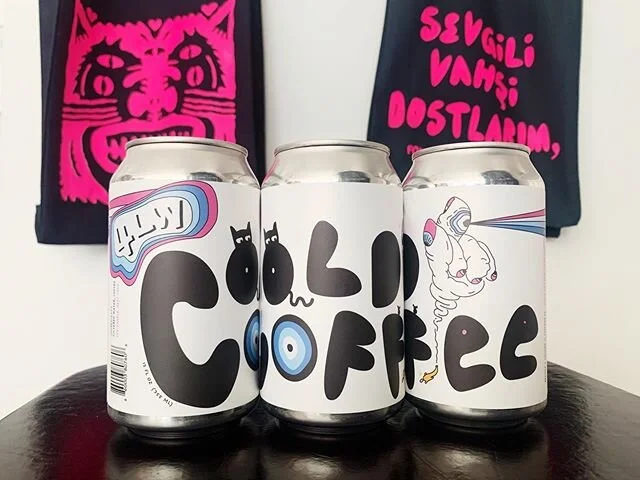
6 servings of our DECAF Ethiopia Abdo Aba Mecha, instantly.
Just add hot water.
In collaboration with Swift Cup Coffee.
PRODUCER: Sookoo Coffee / Ture Waji
LOCATION: Shakiso, Guji
DRYING STATION: Suke
VARIETY: Gibirinna 74110, Serto 74112
PROCESS: Natural
CHOCOLATE DIPPED DRIED MANGO, VALENCIA ORANGE
Nestled in the hills of Shakiso, Guji, the Suke drying station has been a cornerstone of Sookoo Coffee since its establishment in 2017.
Today, Suke buys cherries from approximately 35 smallholder farmers to produce Shoondhisa. Unlike in much of Latin America, where coffee is often grown on large estates with thousands of trees, most Ethiopian farmers cultivate small plots. It is not uncommon for coffee to come from home gardens, intercropped with subsistence crops. While the average Ethiopian farm is 2.5 hectares—larger than the average farm in Colombia—the planting density is far lower. Coffee in Ethiopia is typically grown in fully or semi-forested systems, resulting in fewer trees per hectare and lower yields. The national average yield is an astonishingly modest 0.8 kilograms of cherry per tree per year.
All cherries delivered to Suke are organically produced, reflecting both tradition and ecological stewardship.
Whole Bean / For Filter and Espresso
We recommend resting our coffees for at least 10 days post-roast. Dense coffees, in particular, often continue to improve for more than six weeks.